
October 8, 2018
Written by
Katherine Baxter and Emma Miller
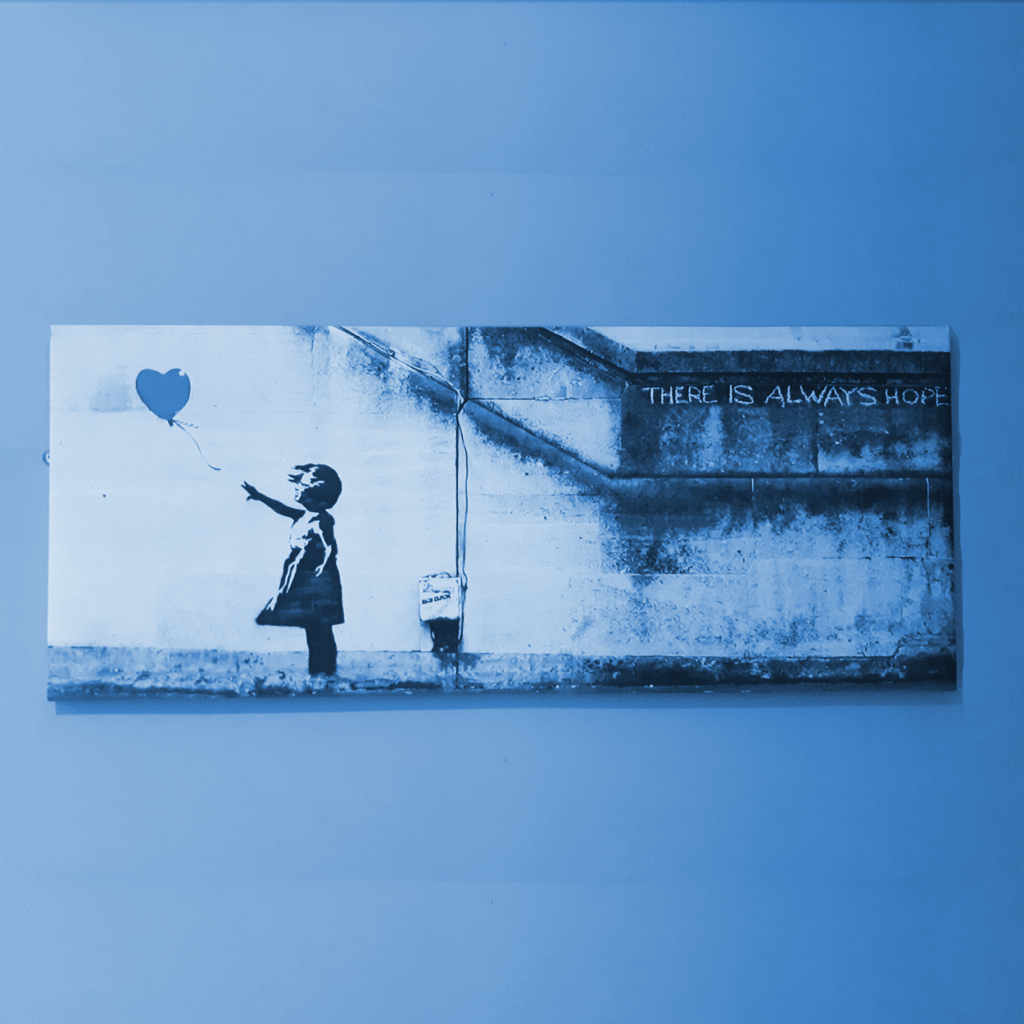
As this first phase of the Talking Hope project comes to a close, we want to step back for a moment and consider how ‘Hope’ connects with key concepts that have arisen in our conversations with young people in the Good Shepherd Centre and the staff who work with them. ‘Agency’, or, simply put, having control over your life, is a term used frequently by young people and staff. For young people who have almost always experienced trauma in their lives, we found that hope and agency can be recovered through beginning to imagine a better future for themselves, and by being encouraged and given the space to do so. This may have a very short-term focus at first, involving small, realisable steps towards that initial goal, and this often involves close collaboration with staff. It is this type of patient and persistent work that seems to have the potential to open up a canvas for young people to imagine, hope for and take concrete steps towards building a better life.
Most of the time we spent in the Good Shepherd Centre was during office hours, resulting in more time spent in education and in the classroom than in the residential care side. While we talk about the education side of secure care more in this blog, it is clear that residential staff are a crucial part of the scaffolding of support that enables hope to come into the picture for young people during their time at the Good Shepherd Centre. On both sides of secure care – residential support and education provision – there is space for creativity in the ways in which staff support and engage with young people, which we have found enables trusting relationships to form, opens up possibilities of self-discovery and self esteem, in order to ignite hope and agency.
It is also important to remember that young people in secure care have been compulsorily detained for their own safety and/or the safety of others. Therefore, one of the key features of secure care is restriction. One might wonder: in the context of such risk and restriction, how can you also create space for hope, agency and creativity? At the Good Shepherd Centre we have been continually impressed by the ability of staff and young people to find ways to experiment creatively within their role. Indeed, in some ways it seems there might be more time for staff to engage creatively with individual pupils that might be less amenable in mainstream education, with observable benefits. There is a professional and personal culture of openness and generosity, which allows both staff and young people to feel comfortable and supported to take chances, make mistakes – and crucially, to learn, develop and grow as individuals, resulting in hope.
It was also encouraging to see teachers able to respond to different learning styles and needs. This makes a huge difference not only to the teachers who are empowered by this freedom in the classrooms, but also to the young people who get to learn about things they care about, in ways they have a say in, and who as a result actually enjoy education – an experience many young people express as a first for them. One example of this is a collaboration amongst the English and Media teachers wherein young people made short documentaries about issues or topics they cared about. These included: homelessness, the care system, secure care vs. psychiatric facilities, self-harm and world war two. In an innovative and participatory form of social reporting, the young people wrote and researched the script for the documentary in English class and then recorded it and added visuals in media class.
Nearly all young people at the Good Shepherd Centre express how much they enjoy education, and how much they’ve learned while being there. When asked what they would change about the GSC a common response is “more time spent in education,” which itself can be a turning point.
Evidence of the creative and responsive approach adopted at the Good Shepherd emerged in conversation with some of the young people. One young person spoke about the process of becoming confident enough to ask questions in the centre, and how much that changed things for them. They said:
“In the UK what makes it hard for young people is they don’t have much of a say, you have to be 16-18 to have a say, and these young children, it’s new for them. Sometimes, like when I first went into care I didn’t know what to say, I felt claustrophobic, but now I say what I think and that’s just because I’ve had to build up the confidence in myself.”
They went on to describe their desire to help support other young people coming into secure care, a project they are working on English class:
I want to make an introduction pack for when you first come into secure because I can remember my first secure – I didn’t have no help, no one helped me or told me what was good, what was bad, what was expected. And it’s just, you don’t know what to expect, you’ve lost your freedom you have no family and it is a shock. And I’d just like to say what my experience was and what other people have said, and I would include like the feelings I had and what should be expected, and just hopefully that would give a bit of hope, as we say hope, so that they can do a good start in the Good Shepherd.”
This young person found a sense of agency in finding the confidence to ask questions and critically engage with what was happening to them. That agency then translated into them wanting to help support other young people who might have a hard time when they first come into secure.
The desire to translate personally challenging experiences into support for others was specifically linked to the need for better mental health support by another young person:
“I was trying while I was in here to join the mental health commission to make the mental health services for young folk better because that’s why I’m in here.”
In these testimonials young people expressed a desire to be able to exercise more control, in their lives and in their communities, and to be able to make a difference and change things for the better. They had moved past feelings of helplessness and hopelessness to discover something that mattered to them and that they could set goals towards. In this subtle way, hope is linked to agency for these young people, and their agency is often discovered through being given the opportunity to learn in ways that suit their unique needs, be creative and ask questions. What is required more generally however is that the voice of the young person has to be facilitated and heard in both residential and education settings within the secure care setting. This highly skilled and creative work by all staff, combined with the strengths and emergent hopes of the young people, encapsulates the important relationships between hope, agency and the pursuit of a better life.
 talkinghope.uk