
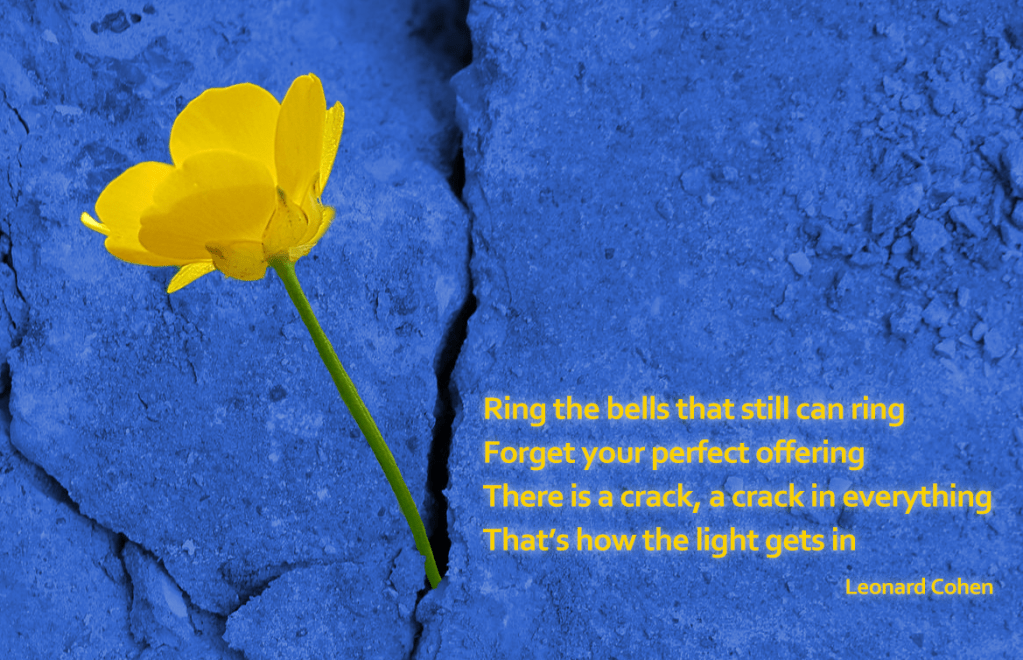
We have learned that it is important to reassure people that hope is not about wearing rose tinted spectacles, or pretending that everything is going to be alright. It is essential to acknowledge that human lives are complex, there will always be bumps in the road and that tragedy and loss do happen.
We have also learned that hope is fragile and sits closely alongside hopelessness. Everyone to varying extents moves between hope and hopelessness over time, influenced by personal and wider social circumstances. When hopelessness takes a firm hold, it can be hard to believe that things can be better.
Young people who connected with the Talking Hope project taught us about the importance of setting goals that are manageable and achievable when hope is hard to find. They also taught us the importance of relationships and having someone who believes in you, to provide the motivation to achieve those goals. Staff also talked about the importance of believing that change is possible.
“Those who have a ‘why’ to live, can bear with almost any ‘how’.”
― Viktor E. Frankl, Man’s Search for Meaning
Acknowledging grief and loss
Pain, grief and loss are all parts of life that we need to acknowledge and work through with young people and families as well as staff. The importance of trusting relationships for people who have experienced grief and loss is fundamental to generating hope. We spoke to a parent supported by includem who identified that she had got to a better stage in her life. She had started to work on her own past history and loss and emotional struggles. She was going through counselling at the time. This was working so well for her, she was persuading friends to try it.
“What has made a difference is starting speaking to people – not shutting myself down like before – and all the services had been saying the same thing, they said you need to look after yourself. I didn’t know what to expect the first time in counselling – it was just the relief of that hour to myself – pretty much every week I was in tears – just that person to speak to. I have learnt closing off doesn’t get you anywhere…. When my son was in trouble last weekend he noticed the difference. He said ‘mum you are on fire’…because before I would have been distressed but I stood strong”
Parent supported by includem
Thinking about grief and loss for staff, Norrie Clark, service manager for Stepdown (at St Mary’s secure care centre), wrote a blog about grief and loss for young people and staff. His Masters dissertation was on this topic and he quoted a member of staff who contributed to his research:
“We aren’t working machines; we don’t just close off. You’re working with people, it’s relationships and whether they’re positive or negative it is still loss in some sense. I think loss comes in all sorts of forms in the job that we do.“
In his blog, Norrie talks about the tendency in Scotland for people not to talk about their emotions, including in services. As a manager in his organisation, Norrie tries to be mindful of the emotional impact of the work on his staff and the need to acknowledge and talk this through.
The Hope Reservoir
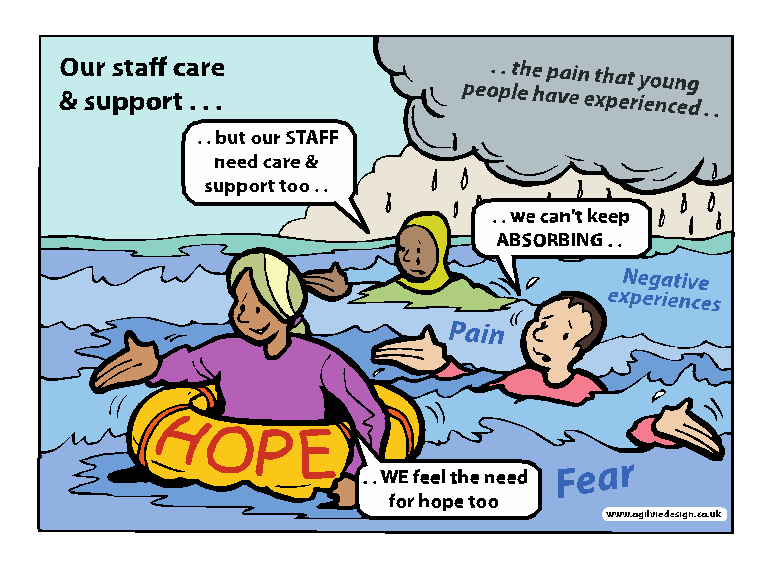
The original idea of the hope reservoir came from our steering group meetings. The hope reservoir is somewhere you can store hopeful images, memories, quotes and music to revisit when life/work is more challenging. A hope reservoir can be an individual thing, or something to be built with a young person, or by a team. It can encourage a focus on the small successes and bits of positive feedback that we don’t usually take the time to celebrate. And it needs topped up from time to time!
It’s good to talk
When someone is feeling hopeless, it is so important to encourage them to talk. Staff teams involved with Talking Hope told us that they benefited from checking in with each other more during the pandemic and many are continuing to do this. There is always someone to talk to.
Breathing Space 0800 83 85 87 for urgent emotional support
The Samaritans 116 123 when you or someone you know is really struggling
 talkinghope.uk