
KEY TOPICS:
- Understanding Hope
- Talking Mats
- Creating Safe Spaces to Support Communication

Understanding underpins hope. Young people’ and families need to understand what is happening and why it is happening, as well as what the possibilities are – to have agency and hope. Staff also need to understand how the young person and family tick to support their participation. Everyone also needs to understand their own role and the roles of others involved to get the best decisions.
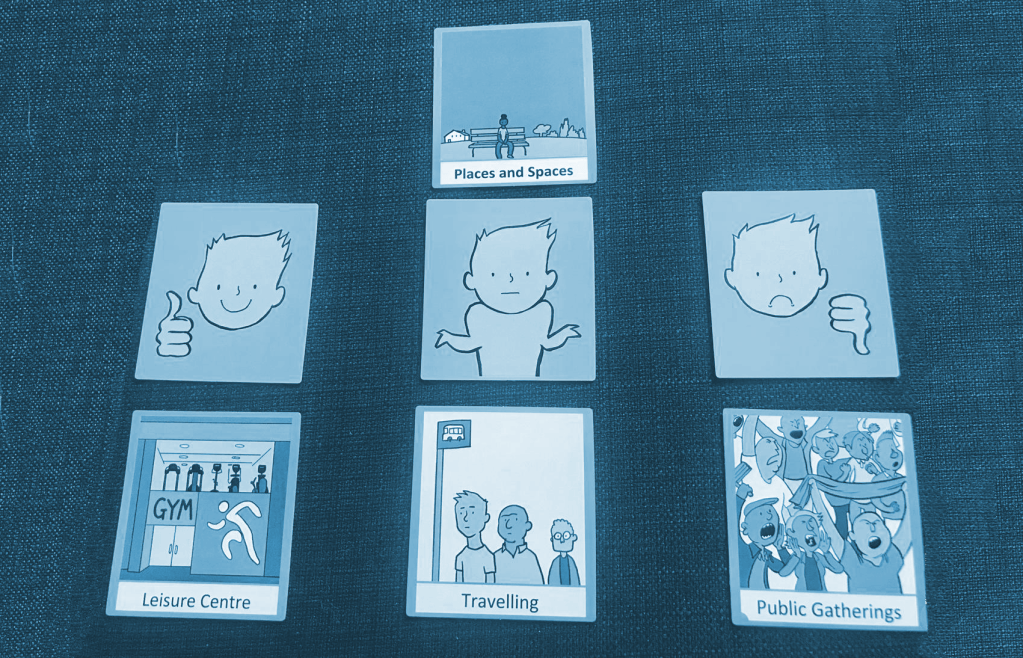
One part of improving communication and understanding is finding ways to establish how comfortable a young person is with different forms of communication. When communication is more challenging, visual tools such as Talking Mats (see below) can be a useful starting point for a first conversation.
Other times, it may help to establish levels of understanding with a young person before trying different ways of communication. Language can be personal and powerful for young people, and everyone interacts with language and words in different ways.
A conversation to work out communication support needs
The key focus should be on having a conversation:
“The focus of my work with a young person is always to have a conversation about what matters to them. I can do as many assessments as I like from my agenda, but is it actually going to make a difference to what matters to them? And the only way I can find that out is to have a conversation… {which} might need to be supported…by giving them extra time to form a response. With young people who are not used to being listened to, we don’t give them time—but we need to because they don’t expect that their opinion about themselves really matters. Decisions have quite often been taken without them being involved in that decision, and sometimes we need to find ways to support them to have this conversation.”
Ros Taylor, Speech & Language Therapist, Ayrshire & Arran CAMHS
Ros shared with us her starter questions for getting to know young people’s communication support needs.
Talking Mats: a visual communication support tool
The aim of Talking Mats is to create a safe, non-judgemental space for conversation, using visual symbols. It actively helps the practitioner to understand the person’s feelings and circumstances. Once a strong sense of connection is established, it provides an effective foundation for working together.
The tool promotes hopeful conversations, because it gives the person control – they hold the cards (literally) and they choose where to place them on the mat. They also decide how much or how little they want to say while they are doing this. This dynamic actively builds trust.
A new youth justice version of Talking Mats was produced in 2022, and the Talking Hope team were delighted to be invited to say a bit about our project at the launch. A key TM principle is to avoid using the ‘why’ question which can put pressure on the young person and instead use images to help them reflect and take control. This is relevant to our recording section too, as Talking Mats can be included as an image based part of an individual’s plan.
You can read more about Talking Mats resource in our blog section.
Creating safe spaces to support communication
The Talking Hope project promotes the importance of dialogue in promoting hope. The aim is to ensure that everyone has a voice. This requires understanding what barriers that person might be facing and how best to support their participation.
At Rossie secure care centre, staff told us about one young person who copes with meetings by hiding his face behind a cushion, which enables him to contribute and manage his anxieties at the same time. Staff are continuing to support him to further build his confidence. Other examples of supporting people with communication support needs include visual contributions to meetings such as a completed Talking Mat, drawing and art work and pre-recording the voice of the young person.
The following sibling of a young adult in a psychiatric setting told us how they work with staff to enable their sister’s voice to be part of decision-making at review meetings:
“My sister is autistic and struggles with her mental health. She does not want to participate in any meeting with more than three people in it. So when it is coming up to her reviews, the staff and my family talk to her to find out what she is thinking and hoping for. This includes writing down her views with her to make sure we understand and then after the meeting we make a point of telling her how her views contributed to decisions and what will happen next. She talks to staff about different things than her family, so including both sets of information gives a fuller picture”
Steering group member
 talkinghope.uk