
KEY TOPICS
- Links between hope and belief
- Adding hope to SHANARRIH
- Hopeful recruitment and support for staff
- Support and supervision for staff
Leadership style within an organisation has a strong influence on organisational culture, or ‘how we do things round here,’ which in turn has a strong influence on hope. Leaders should model the kinds of behaviour and practice that is desired of people around them to set the tone for ‘how things are done.’
In the context of The Promise in Scotland, this means ensuring that young people, families and staff are listened to and have a voice in decision-making. It also means being strengths based and being attentive to and amplifying examples of positive behaviour and good practice, as well as challenges.
Consistent with the principles of the Talking Hope project, this means valuing and creating space for conversation between colleagues as well as between staff and supported people.
Links between hope and belief
Links between hope and belief emerged powerfully in phase three. In our conversations with staff we found that remaining hopeful was linked to a belief that they could make a difference to the lives of the people they support. For people being supported maintaining hope meant believing that a better life is possible. And as the following care experienced adult described it, having someone believe in her was critical to believing a better life was possible:
“Yeah I think especially at times when someone has completely given up on themselves it’s so important for someone to kind of hold that hope for them…. For me the most helpful thing has been not just people who believe that I could have something better in my life, but also that I was capable of looking after myself and keeping myself safe and kind of putting more trust in me and helping me build up that trust in myself that I could be more responsible”
Secure care experienced young adult
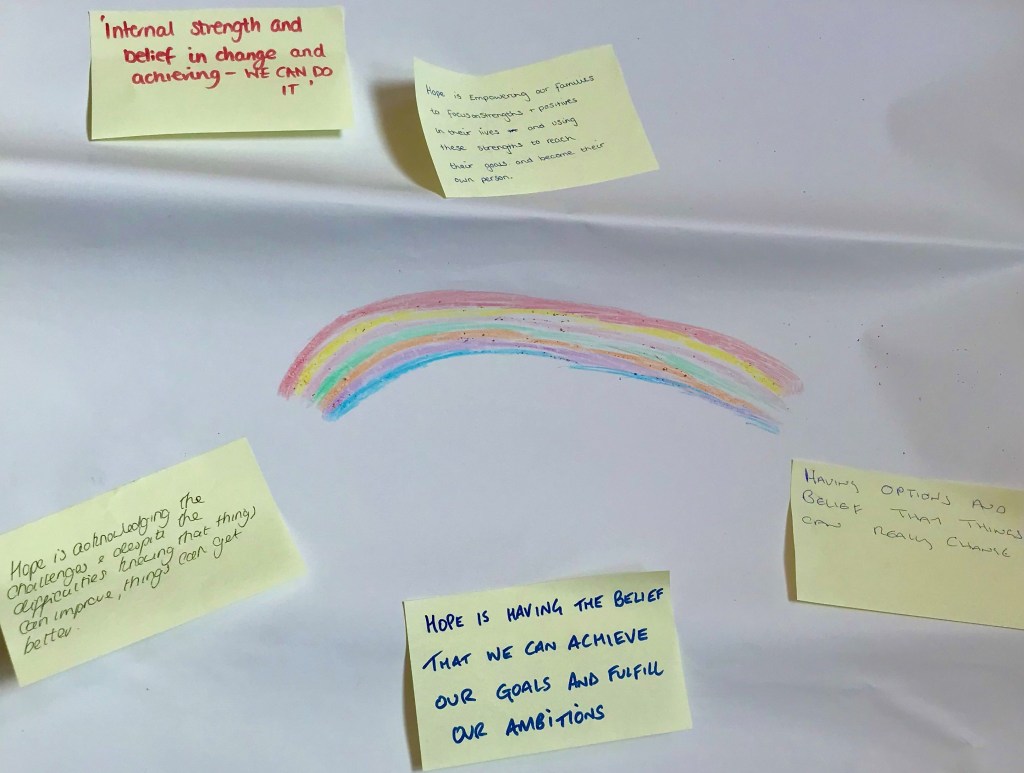
Hope was a key feature at a staff development day in Ayr in April 2022.
We liked this hopeful quote from the book Transformative Leadership by James McGregor Burns:
“A leader not only speaks to immediate wants but elevates people by vesting in them a sense of possibility, a belief that changes can be made and that they can make them. Opportunity beckons where none had appeared before, and once seized upon opens another opportunity and another.
Burns, 2003, p. 239
Adding Hope to SHANARRIH
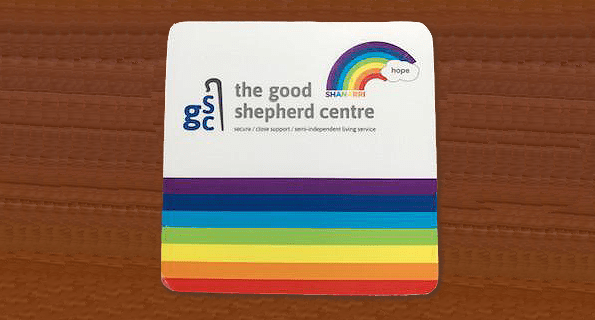
Making hope a visible and practical feature of services can help. The Good Shepherd Centre added hope to the wellbeing indicators for children and young people:
- Safe
- Healthy
- Achieving
- Nurtured
- Active
- Respected
- Responsible
- Included
- Hope
Includem also made hope a more explicit aspect of their service delivery during Talking Hope 3. Their Stirling team built hope into their referral process.
“Talking about hope at the end of the wellbeing web during a meeting creates a really positive ending. One young person recognised what support he needed for his emotions. It helped him acknowledge that everyone was there to help with the changes he wanted to make.”
“Another young person thought about the question for quite a while – much longer than he thought about SHANARRI.”
“I use it to reflect on SHANARRI once we have done a wellbeing web. We look at each one and talk about ‘how hopeful are you that you will be more safe?’ etc. We don’t score hope, but it changes scores for the others. When you read the guidance on Wellbeing Webs, it asks you to consider the last 8 weeks which focuses on review or looking backward. Hope makes it look forward.”
Stirling includem staff
You can read more about the work by includem in Stirling here.
Fostering creativity underpins good leadership. All of our partners shared examples of creativity, especially during the pandemic, some of which we have shared throughout this resource.
Hopeful recruitment & support for staff
During phase 3, as our partners were coming through a period of lockdowns and changes associated with the pandemic, they also faced challenges with recruitment and retention of staff. Steering group members identified more of a desire amongst potential recruits and existing staff for a work-life balance.
We held a separate steering group meeting on this topic. There was a shared concern about the emerging cost of living crisis, and its impact on staff financial and wider wellbeing. Whilst there was a collective view that current pay levels were not sustainable, there were ways to influence working conditions and in particular to promote and preserve values.
You can read more about the discussion here.
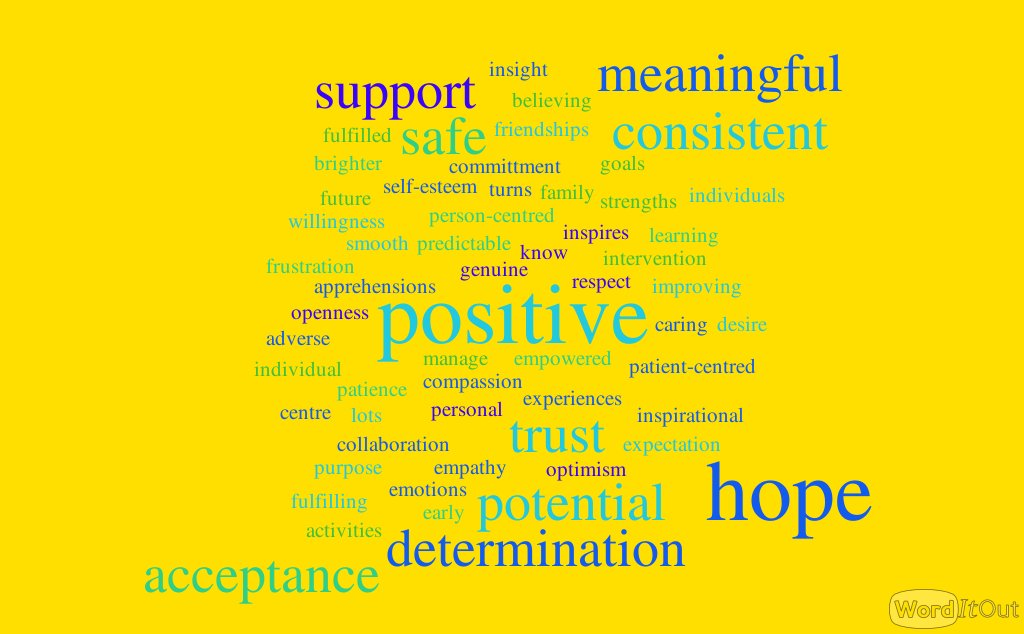
Support and supervision were identified as crucial for retaining staff. We hosted a focus group on this theme, attended by managers from three of our partner organisations in May 2022. You can read their exchange of ideas and reflections on staff supervision and support here.
 talkinghope.uk